Preparing a student for the bac: a full-year plan
At the French bac, 40% of the grade is decided before June, through continuous assessment. The full-year plan to prepare a student the right way.
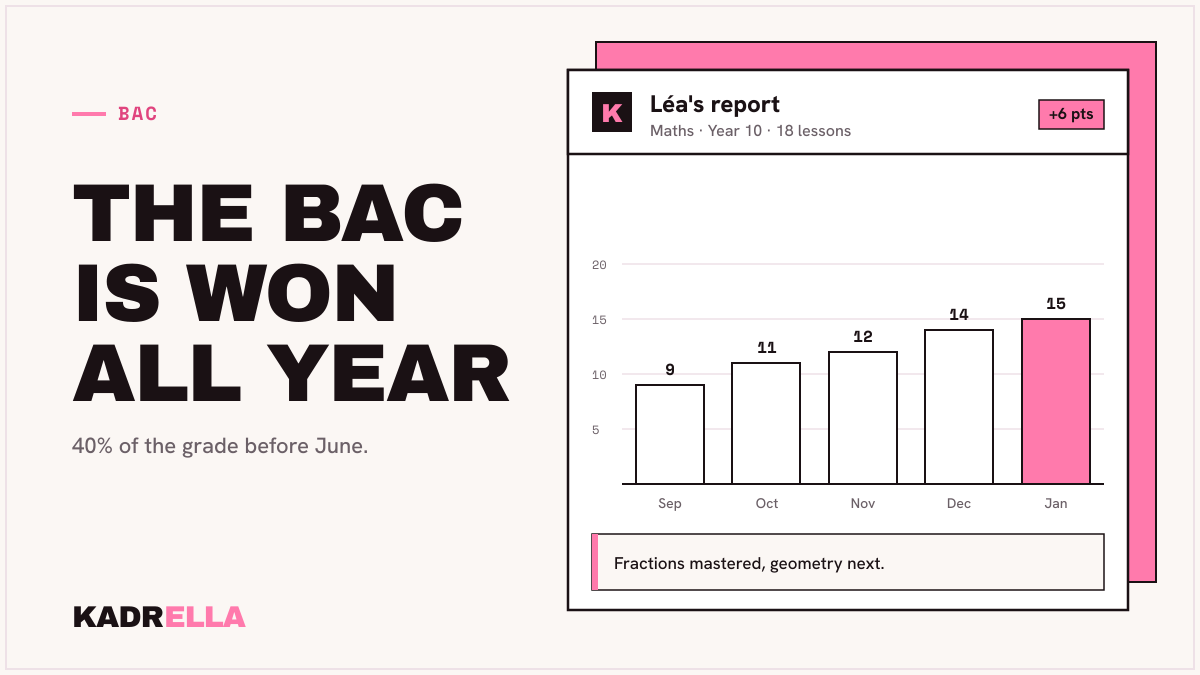
Preparing a student for the French bac means spreading the work across the whole final year, because 40% of the grade is already at stake before the first written exam. The grading rules are set by the French Ministry of Education, and they shape how you should work: a weak term costs as much as a botched exam.
What actually counts in the grade
In the general bac, the coefficients add up to 100. Continuous assessment accounts for 40 of them, the final exams for 60. The term averages from the last two years of lycée are not a side note: they weigh almost as much as the June exams.
On the final-exam side, here are the coefficients to keep in mind:
- The two specialty subjects: coefficient 16 each, 32 on their own.
- The grand oral: coefficient 10.
- Philosophy: coefficient 8.
- French, sat at the end of the first year in writing and speaking: coefficient 10.
The takeaway is clear. The two specialties decide the bac. A student aiming for distinction puts most of their energy there, without dropping philosophy, which people often underrate.
French, a bac exam taken a year early
The French exam is sat at the end of the première year, a full year before the rest, and carries coefficient 10 across the written and oral parts. That matches the grand oral. A student you follow from the first year gets a real head start there: they lock in 10 coefficient points while the final year stays free for the two specialties.
A year-long plan, not a June sprint
The classic trap is to wait for spring. Since 40% rides on continuous assessment, every test counts from September. Split the final year into three phases.
September to December: lay the foundations
Go back over the key ideas in both specialties, close the gaps from the previous year, and set up a steady study routine. At this stage the goal is consistency, not speed. A short written report to parents every month heads off bad surprises at the class council and shows progress in black and white. Our piece on progress tracking gives a simple template to reuse.
January to March: move to exam format
Bring in past papers and sample questions under timed conditions. The student has to get used to the format: a full answer in a specialty, an essay or a commentary in philosophy. The winter and spring holidays are the right moment for a revision course focused on the specialty that is lagging.
April to June: specialties, philosophy, grand oral
The written specialty and philosophy exams take place in June, followed by the grand oral at the end of the month. The last weeks are for consolidating, not discovering. You review the notes, redo the questions that went wrong, and rehearse the grand oral until it flows.
Want every revision lesson this week on one screen?
Try it freeThe grand oral, the easiest exam to prepare
The grand oral lasts 20 minutes, after 20 minutes of preparation. The student presents two questions prepared from the first year, tied to their two specialties, then talks with the panel. It is the most rewarding exam to train for in one-to-one lessons: you build the two questions together, rehearse out loud, and fix posture and pace.
Three tips that win points:
- Pick questions the student genuinely wants to defend.
- Prepare the discussion as much as the talk, because the panel follows up on answers.
- Practice standing, without notes, several times before June.
A student who has rehearsed the grand oral ten times walks in calm on the day. One who discovers it the night before loses points on delivery, not on content.
The mistakes that cost points
- Betting everything on June and letting the continuous-assessment averages slip.
- Neglecting philosophy because the specialty is more appealing.
- Waiting until March to open the first past papers.
- Forgetting that the first-year French exam weighs as much as the grand oral.
When you follow several final-year students, keeping a clear record of lessons and deadlines per student stops any of them from falling through the cracks. An up-to-date lesson schedule is enough to see who needs what, and when.
Sources

Computer science engineer, Sorbonne UTC graduate. Founder of kadrella.com, the platform built for private tutors.
- eleves
- bac